Phone: +86 15332330113 Email: info@ruipros.com PRECISION CRAFTED TO MEET FUTURE DEMANDS Xi'an, Shaanxi, China

Why Titanium Implants Are Preferred in Medical Devices | High-Quality TC4 & TA2
Explore why titanium is the top choice for medical implants. Learn about TC4 and TA2 titanium alloys, their biocompatibility, mechanical properties, and China's export trends in medical titanium.
mia
3/17/20262 min read
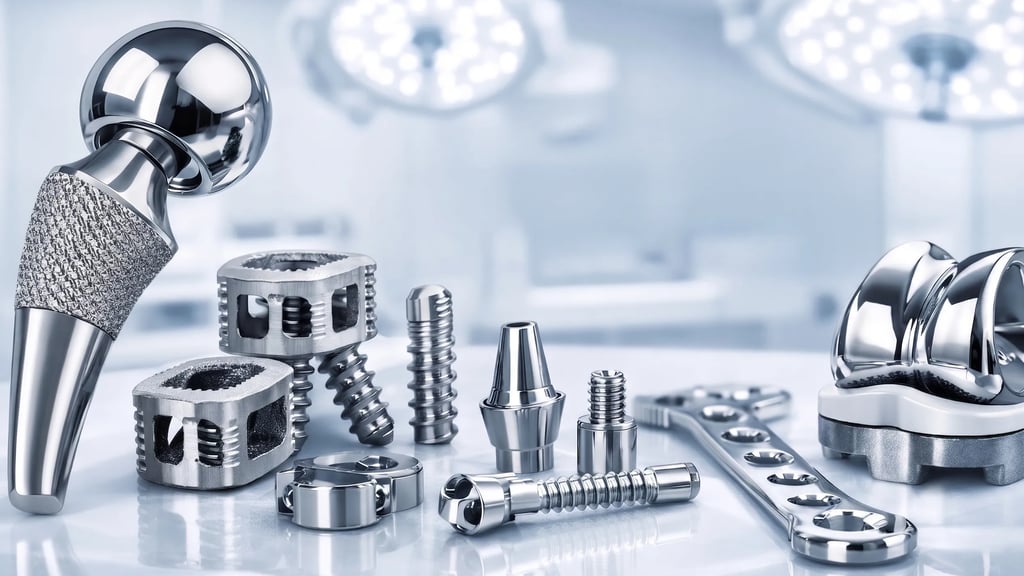
Why Titanium Is the Preferred Material for Medical Implants?
Introduction to Titanium in Medical Applications
Titanium has long been recognized as a superior material for medical implants due to its high strength-to-weight ratio, excellent corrosion resistance, and exceptional biocompatibility.
Market Data: The global medical implant market is expected to exceed $22 billion by 2026, with titanium implants accounting for over 15% of total export volume from China.
Key Applications: Orthopedic implants, dental implants, cranial plates, and spinal fixation devices.
Titanium Alloy Types for Implants
TA2 Titanium
Density: 4.51 g/cm³
Ultimate Tensile Strength: 345 MPa
Elongation: 25%
Applications: Dental implants, bone plates, low-load orthopedic applications
TC4 Titanium (Ti-6Al-4V)
Density: 4.43 g/cm³
Ultimate Tensile Strength: 895 MPa
Yield Strength: 828 MPa
Elongation: 10–15%
Applications: Load-bearing orthopedic implants, spinal fixation, cranial plates
Data Insight: TC4 titanium’s high strength and excellent fatigue resistance make it ideal for long-term implant applications, particularly in weight-bearing bones.
Advantages of Titanium Implants
Biocompatibility: Titanium forms a stable oxide layer on its surface, minimizing the risk of rejection.
Corrosion Resistance: Resistant to bodily fluids, ensuring longevity of implants.
Lightweight & Strong: Titanium’s density is almost 40% lower than stainless steel, reducing patient discomfort while providing superior structural support.
Osseointegration: Promotes bone growth directly on the implant surface, improving healing rates.
Choosing the Right Titanium Implant Supplier
Tips for Importers:
Verify alloy certification (ASTM, ISO, GB standards)
Check mechanical properties report
Ensure FDA or CE certification for implant products
Consider suppliers with proven export experience to your country
Conclusion
Titanium’s unique combination of strength, biocompatibility, and corrosion resistance makes it the most reliable material for medical implants. Chinese TC4 and TA2 titanium alloys have gained international recognition, offering high-quality, cost-effective options for global markets.
FAQs
Q1: What is the difference between TA2 and TC4 titanium?
A: TA2 is commercially pure, lower strength, suitable for low-load implants. TC4 is an alloy (Ti-6Al-4V) with higher strength, fatigue resistance, suitable for load-bearing implants.
Q2: Can titanium implants be used in dental applications?
A: Yes, both TA2 and TC4 are commonly used in dental implants due to excellent biocompatibility and osseointegration.
Q3: Is China a reliable supplier of titanium implants?
A: Yes, many Chinese manufacturers provide FDA and CE certified TC4 and TA2 implants with proven export experience.
Get In Touch
For inquiries regarding our products or to request a detailed price list, please contact us. We guarantee a response within 24 business hours.
© 2026 Copyright, Xi'an Qirui Technology Co., Ltd.
Products
📍 Sihai Center, Weiyang District, Xi'an, Shaanxi Province, China
✉️ Email: info@ruipros.com
📞 Phone: +86 15332330113
💬 WhatsApp: +86 15332330113


Resource
Titanium Forging
Titanium For Aerospace
Titanium Plate AMS 4911 / AMS 4902
Titanium Round Bar AMS 2631 / AMS 4928/ AMS 4965 / AMS 6930 / AMS 6931
Titanium For Medical
CP Titanium Grade 1 / Grade 2 / Grade 3 / Grade4 ELI ASTM F67 / ISO 5832-2
Titanium Alloy Grade 5 ELI / Ti-6Al-4V ELI ASTM F136 / ISO 5832-3