Phone: +86 15332330113 Email: info@ruipros.com PRECISION CRAFTED TO MEET FUTURE DEMANDS Xi'an, Shaanxi, China

Marine Titanium Solutions for Seawater & Offshore Engineering
🌊 Marine Engineering & Titanium Corrosion Resistance
Marine engineering is constantly challenged by highly corrosive seawater environments, where high salinity, pressure, and temperature accelerate material degradation.
Conventional materials such as carbon steel and copper alloys often experience rapid failure in seawater applications. Steel pipelines may suffer severe corrosion within a few years, while copper-nickel heat exchangers typically require frequent maintenance and replacement, leading to significant operational costs in offshore systems.
Titanium has become a preferred material in marine and seawater engineering due to its outstanding corrosion resistance and long service life.
1. Excellent corrosion resistance
Titanium forms a stable and self-healing oxide film (TiO₂) that remains highly resistant in chloride-rich seawater environments, including high salinity, hydrogen sulfide exposure, and elevated temperatures. Its corrosion rate is extremely low, making it suitable for long-term seawater immersion applications.
2. High strength and lightweight performance
With a density about 45% lower than steel and a superior strength-to-weight ratio, titanium enables significant structural weight reduction while maintaining excellent mechanical reliability in offshore and marine structures.
3. Long service life and life-cycle economy
Although the initial material cost of titanium is higher than conventional alloys, its long-term durability and minimal maintenance requirements can significantly reduce total life-cycle costs in marine systems.
From offshore oil and gas platforms, seawater cooling systems, and desalination plants to deep-sea exploration and marine energy projects, titanium is increasingly used as a core engineering material in modern marine infrastructure.
RuiPros supplies marine-grade titanium materials including titanium tubes, pipes, flanges, and fasteners designed for seawater applications, supporting long-term reliability in demanding offshore environments.
Marine Titanium Supplier Solutions
⚙️RuiPros supplies marine-grade titanium materials and engineered solutions for seawater and offshore applications.
✔ Titanium Products We Supply
Titanium Tubes are the core product for seawater cooling, desalination, and heat exchange systems in marine engineering.
Titanium Tubes (ASTM B338 / B861)
Titanium Flanges (Gr2 / Gr5)
Titanium Fittings and Connectors
Titanium Tube Sheets for Heat Exchangers
✔ Marine Application → Titanium Product Mapping
Seawater cooling systems → Titanium Tube (ASTM B338)
Heat exchangers → Titanium Tube Sheet
Offshore piping systems → Titanium Seamless Pipe
Seawater pipelines → Titanium Flange (Gr2 / Gr5)
Structural connections → Titanium Fasteners
✔ Our Capabilities
ASTM-certified materials
OEM & custom CNC machining
Global export supply chain
Engineering support for projects
Key Advantages of Titanium in Marine Environments
⚙️1. Outstanding Corrosion Resistance
Titanium forms a stable passive oxide layer in seawater, providing excellent resistance to aggressive marine conditions:
Chloride ion resistance up to 100,000 ppm
Hydrogen sulfide resistance up to 100 ppm
High-temperature seawater resistance up to 80°C
Corrosion rate: < 0.001 mm/year
⚖️ 2. Lightweight & High Strength
Density: 57% of steel
High strength-to-weight ratio (~22)
Enables 30–40% weight reduction in marine structures
👉 Ideal for offshore platforms and ship systems requiring structural efficiency.
💰 3. Life Cycle Cost Efficiency
Although titanium has a higher initial cost (3–5x stainless steel), its long-term benefits include:
30+ years service life
Near-zero maintenance requirements
Up to 45% total lifecycle cost reduction
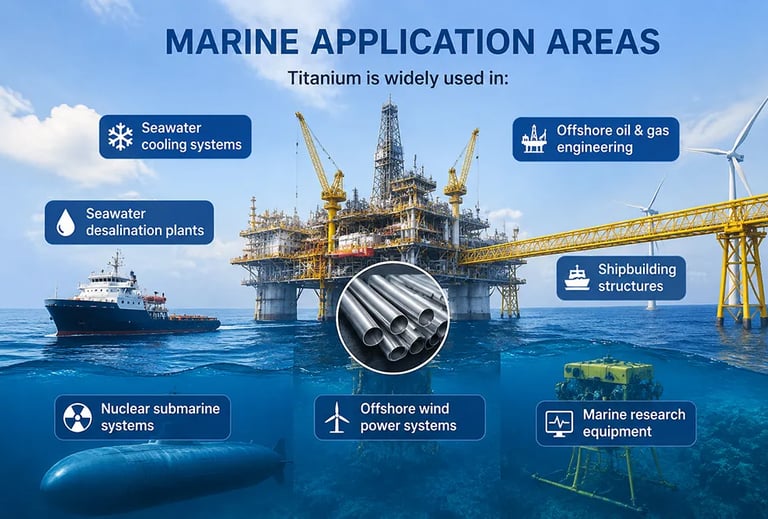
🌍Marine Application Areas
Titanium is widely used in:
Seawater cooling systems
Seawater desalination plants
Offshore oil & gas engineering
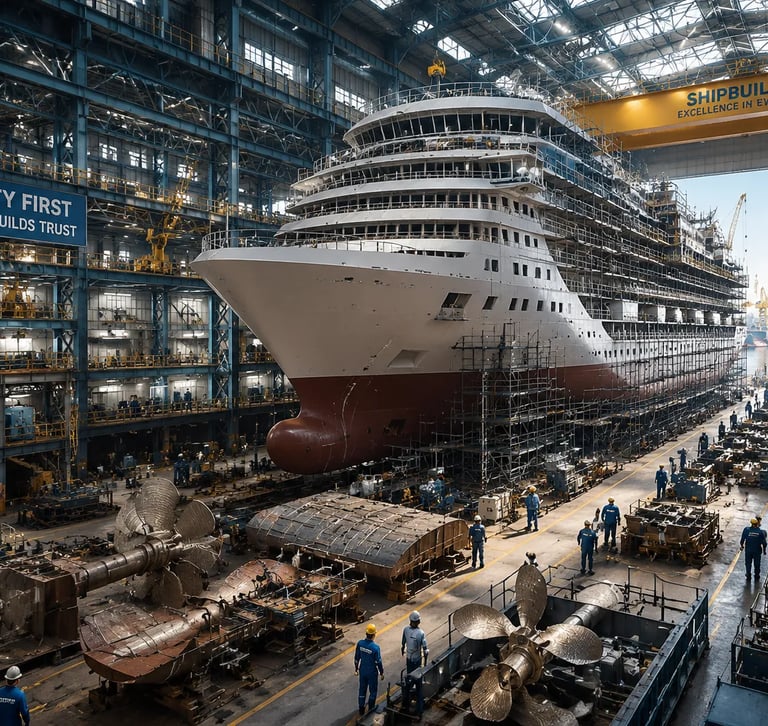
Shipbuilding structures
Nuclear submarine systems
Offshore wind power systems
Marine research equipment
Marine electronic & acoustic systems
RuiPros supplies marine-grade titanium materials compliant with international standards:
ASTM Standards:
ASTM B338, ASTM B861, ASTM B862, ASTM B265, ASTM B367, ASTM B381, ASTM B462, ASTM B363, ASTM F467, ASTM F468
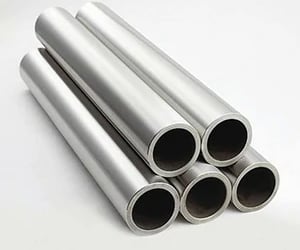
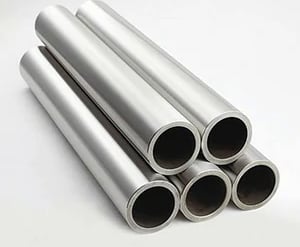
1️⃣ Seamless Titanium Tube
Alloy: Gr2, Gr5, Gr12
Commonly used in high-pressure heat exchanger pipelines, seawater cooling pipelines, and nuclear power plant condenser cooling tubes.
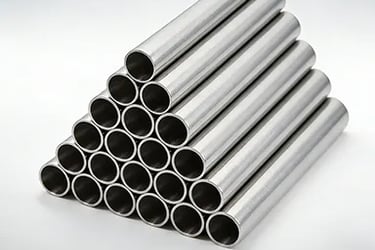
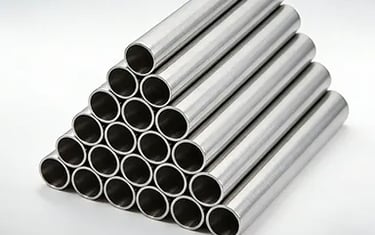
2️⃣ Welded Titanium Tube
Alloy: Gr7 (Ti-0.2Pd)
Commonly used in low-pressure seawater circulation pipelines, offshore platform fire systems, and open-circuit cooling systems for ships.
3️⃣ Titanium Tube Plate
Alloy: Gr2, Gr16 (Ti-0.05Pd)
Secures titanium tubes in heat exchangers, forming tube bundle assemblies.
Commonly used in multi-effect distillation (MED) tube bundle support plates.


4️⃣ Titanium Flange
Alloy: Gr5
Connects pipelines and links equipment and pipes, commonly applied in directional connections for cooling pipelines.

5️⃣ Titanium Tube Fittings
Alloy: Gr2, Gr5
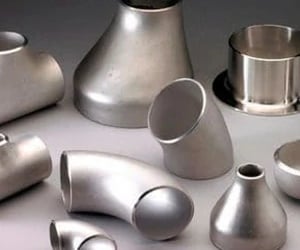
Includes titanium elbows, tees, flanges, etc., responsible for pipeline connections and fluid guidance.
6️⃣ Titanium Fasteners
Alloy: Gr5, Titanium-Copper Composite
Used to secure cooling system components, commonly applied in hull connections and deep-sea equipment assemblies.
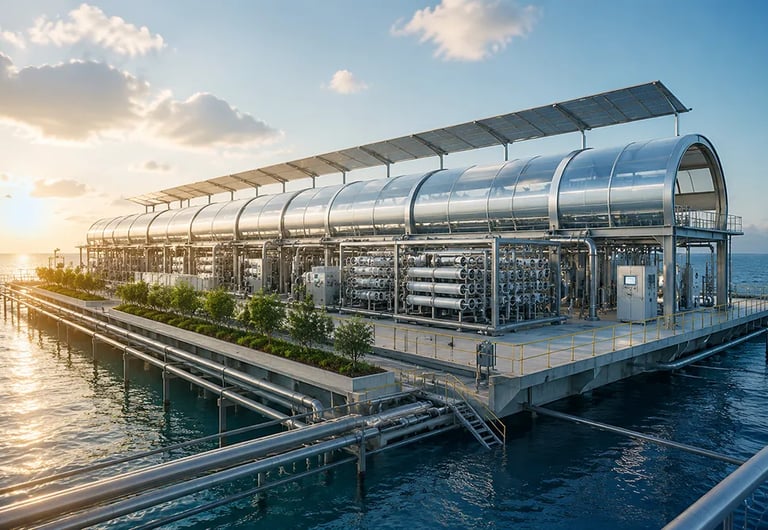
🌊 Titanium Tubes for Sea Water Cooling Systems
High Corrosion Resistance Solution for Marine & Power Industry Applications
Seawater cooling systems operate in extremely aggressive environments, including high salinity, high temperature (up to 80°C), and continuous corrosion exposure. Traditional materials such as copper-nickel alloys and stainless steel suffer from rapid degradation, leading to frequent maintenance, system failure, and high lifecycle costs.
In contrast, titanium tubes provide zero corrosion loss, long-term stability, and a service life of 25–30 years, making them the preferred material for modern marine, offshore, and nuclear power cooling systems.
Titanium vs Copper-Nickel Alloy Performance ComparisonCorrosion Rate
Copper-Nickel: 0.05 mm/year
Titanium (Gr2): 0.001 mm/year → ↓ 98%Service Life
Copper-Nickel: 5–8 years
Titanium: 25–30 years → ↑ 300%Total Lifecycle Cost
Copper-Nickel: High maintenance cost
Titanium: Lower lifecycle cost → ↓ 46%
👉 Titanium significantly reduces long-term operational and maintenance expenses.
Why Titanium Tubes Are the Best Choice
1️⃣ Exceptional Corrosion Resistance
Titanium maintains stability in harsh seawater conditions:
Chloride resistance up to 100,000 ppm
Hydrogen sulfide resistance >100 ppm
High temperature seawater up to 80°C
Corrosion rate: <0.001 mm/year
2️⃣ High Strength & Reliability
Suitable for high-pressure cooling systems
Excellent fatigue resistance
Long-term structural stability
3️⃣ Lifecycle Cost Advantage
Although titanium has higher initial cost, it provides:
30-year service life
Minimal maintenance
Up to 46% total cost reduction over lifecycle
🌍 How to Select Titanium Tubes for Different Applications
🔹 Low-Pressure Seawater Circulation Systems
👉 Recommended: Gr2 Welded Titanium Tube (ASTM B862)
Cost-effective
Good corrosion resistance
Suitable for general seawater pipelines
🔹 Nuclear Power Plant Condensers
👉 Recommended: Gr5 Seamless Titanium Tube (ASTM B338)
High pressure resistance (≥20 MPa)
Excellent durability
Ideal for critical systems
🏭 Real Application Case Study
Saudi Seawater Desalination Plant
Material: Gr2 Titanium Tube (ASTM B338)
Operating condition: 110°C seawater environment
Service life: 30 years
Maintenance cost reduction: 60% vs copper alloys
👉 Demonstrates titanium’s superiority in large-scale desalination systems.
Why Choose RuiPros Titanium as Your Supplier?
🌊 Production & Supply Capability
We operate an integrated titanium supply chain from melting to forming, ensuring stable purity with oxygen content ≤0.15% for deep-sea applications.
Our large-scale capability includes 15-tonne ingots, titanium plates over 3 m wide (5–100 mm thick), and extruded tubes up to 600 mm OD, suitable for seawater cooling and pipeline systems.
⚙️ Precision Manufacturing
We provide complete processing capabilities including surface treatment (acid washing, sandblasting, micro-arc oxidation, anti-fouling or MMO coatings), high-precision cutting (waterjet, laser), welding (EBW, TIG), and advanced forming (superplastic forming, spinning) for complex components. OEM & custom machining capability
📋 Quality & Compliance
Our products comply with ASTM, GB, ABS, and NACE standards, Full range of titanium grades (Gr1–Gr23)
Testing includes UT, RT, PT, salt spray, and pressure simulation to ensure reliability in high-salinity and deep-sea environments.
🚚 Delivery & Support
We supply a full range of titanium mill products and custom sizes with streamlined production for fast delivery.
Our technical team provides material selection and process optimisation support, with after-sales service including remote assistance, rapid response, and stocked spare parts for maintenance and upgrades.
FAQ – Marine Titanium Applications
Why is titanium more expensive than stainless steel? Will it save cost long term?
Although titanium is typically 3–5 times more expensive than stainless steel, its service life can exceed 30 years with virtually no maintenance. Over the full lifecycle, it can reduce total costs by approximately 45%.
For example, replacing copper-nickel alloy tubes with titanium on offshore platforms has saved over USD 2 million in maintenance costs over 30 years. Despite the higher initial investment, titanium is often more economical in long-term marine applications.
How to choose the right titanium grade?
Selection depends on environment, temperature, pressure, and corrosive media:
Gr2 (Commercially Pure Titanium): Suitable for general seawater corrosion protection in shallow water environments
Gr23 (Ti-6Al-4V ELI): Ideal for deep-sea high-pressure applications exceeding 6000 meters due to excellent toughness
Gr7 (Ti-0.2Pd): Best for sulfur-containing environments and hydrogen sulfide corrosion resistance
Other grades: For special load, temperature, or fatigue conditions, technical consultation is recommended
How to prevent galvanic corrosion when connecting titanium with other metals?
To avoid galvanic corrosion, insulating materials such as PTFE gaskets can be used, or titanium-steel explosive cladding transition joints can be applied.
It is also recommended to control current density within ≤0.1 mA/cm² (AMPP guidelines) to slow down corrosion risk effectively.
Will titanium corrode under deep-sea high-pressure conditions?
Titanium performs extremely well in deep-sea environments. In conditions with chloride concentration up to 100,000 ppm and pressure up to 30 MPa, the corrosion rate remains below 0.001 mm/year (ASTM G1).
For severe crevice corrosion conditions, grades such as Gr29 (ruthenium-added titanium) can further enhance resistance.
What testing and quality control are required for marine titanium?
Marine-grade titanium requires strict testing to ensure safety and reliability, including:
Ultrasonic Testing (UT)
Radiographic Testing (RT)
Penetrant Testing (PT)
Salt spray corrosion testing
High-pressure simulation testing
Is titanium welding complex? What standards are followed?
Titanium welding requires stricter control compared to steel or stainless steel.
Recommended processes include:
Laser welding (reduces heat-affected zone by ~50%)
TIG welding (AWS D10.6M standard)
Weld strength should reach ≥90% of base material (GB/T 3620). For thick or critical components, inert gas backing protection is required to ensure weld quality.
How to ensure long-term safety in harsh marine environments?
In high-salinity and impact-heavy environments, it is recommended to:
Select higher corrosion-resistant titanium grades
Apply surface treatments such as micro-arc oxidation or anti-fouling coatings
Perform UT/RT non-destructive testing and high-pressure simulation tests
Conduct regular inspections and corrosion assessments annually or on a planned cycle
Get Marine Titanium Quote
Typical marine project requirements we support:
Seawater cooling system replacement projects
Offshore platform piping upgrades
Desalination plant titanium tube systems
Shipbuilding corrosion-resistant components
If you are looking for marine-grade titanium materials or custom offshore solutions, contact us for a fast quotation.
Response within 24 hours
OEM support available
Global delivery
👉 Request a Quote / Contact Us
Get In Touch
For inquiries regarding our products or to request a detailed price list, please contact us. We guarantee a response within 24 business hours.
© 2026 Copyright, Xi'an Qirui Technology Co., Ltd.
Products
📍 Sihai Center, Weiyang District, Xi'an, Shaanxi Province, China
✉️ Email: info@ruipros.com
📞 Phone: +86 15332330113
💬 WhatsApp: +86 15332330113


Resource
Titanium Forging
Titanium For Aerospace
Titanium Plate AMS 4911 / AMS 4902
Titanium Round Bar AMS 2631 / AMS 4928/ AMS 4965 / AMS 6930 / AMS 6931
Titanium For Medical
CP Titanium Grade 1 / Grade 2 / Grade 3 / Grade4 ELI ASTM F67 / ISO 5832-2
Titanium Alloy Grade 5 ELI / Ti-6Al-4V ELI ASTM F136 / ISO 5832-3